Three-season spaces are less insulated than sunrooms and four season rooms. They could be a covered structure with heaters, a struxure® with screens, glass, heaters; or enclosing an existing patio with Aéré by LivingSpace®. These options provide significant comfort improvement while maintaining a strong connection to the outdoors.
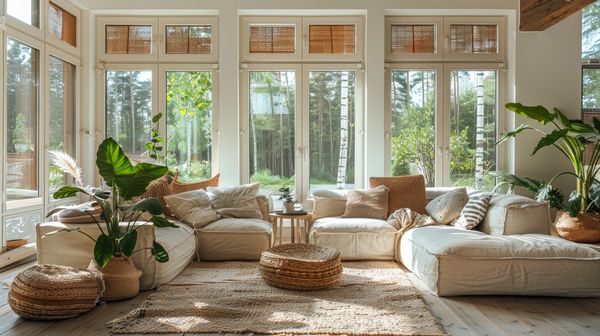
Four-season spaces offer full HVAC systems, are well insulated and typically use thicker glass for the windows. There's more structure that goes into making it a true "four-season room" versus a typical sunroom or three-season room. These spaces are designed for full winter performance in Buffalo and WNY conditions.

Three-season rooms are ideal for homeowners who want more protection from wind, rain, and insects without committing to a fully conditioned space. Let's talk about solutions ↓
Covered Structures with Heaters
Perfect for extending your evenings into cooler months.
Struxure® Pergola Enclosures
Motorized louvers combined with screens, glass panels, lighting, and heaters offer flexible climate control.
Patio or Deck Enclosures
Transforming an existing outdoor footprint into a protected environment.
Aéré By LivingSpace®
More affordable option of a sunroom, allows future upgrades to glass as well.

Because of the added structure and insulation, four-season rooms feel less like an enclosure and more like a natural expansion of your interior living space. Key features of four-season rooms include:
Every three-season and four-season room is tailored to your home’s layout and architectural style. We can customize:
Our goal is to ensure the addition feels original to the home — not attached as an afterthought.

Please reach us at info@4dcustombuilds.com if you cannot find an answer to your question.
Yes. A well-designed three-season room can significantly extend how long you use your space, often from early spring through late fall. When paired with enclosure systems, heaters, or adjustable louvers like those from Struxure®, these rooms provide protection from wind, rain, and insects while still maintaining an open-air feel.
While they are not built for deep winter performance, three-season rooms offer a strong balance between investment and usability for our Western New York climate.
In most cases, yes — but it often requires significant upgrades. Converting typically involves improving insulation, upgrading windows and glass systems, modifying framing, and integrating HVAC. Because of these structural differences, we recommend deciding early in the design phase how you ultimately want the space to function. Planning correctly from the start avoids unnecessary reconstruction later.
When properly designed and integrated into the home’s structure, four-season rooms can increase both functional square footage and resale appeal. Buyers in Western New York value year-round usable space, especially when it feels cohesive with the rest of the home. The key factor is quality of construction and architectural integration. A well-built four-season room feels like part of the original home — not an add-on.
Four-season rooms require more structural framing, insulation, upgraded windows, and mechanical integration, making them a larger investment than three-season options. Three-season rooms are typically more budget-flexible while still offering meaningful comfort improvements. The right choice depends on how often you plan to use the space and whether winter functionality is important to you.
The primary difference is insulation and structural integration. A three-season room typically has limited insulation and may not connect to your home’s HVAC system. It is designed for comfort during mild and moderate weather. A four-season room, however, is engineered as a true addition. It includes full insulation in the walls and roof, higher-performance windows with thicker insulated glass, structural framing designed for snow load, and integration with heating and cooling systems. It functions as livable square footage year-round — even during Buffalo winters.
Snow load, freeze-thaw cycles, and temperature swings are major design considerations in our region. Four-season rooms are engineered with structural framing and roof systems that meet local code requirements for snow load. Insulation, window performance ratings, and sealing methods are selected specifically for cold-weather durability. Even three-season rooms are designed with proper drainage, structural support, and weather exposure in mind.
In most cases, yes — especially for four-season additions. Because these projects often involve structural work, electrical systems, and sometimes HVAC integration, permitting is typically required. We take care of the planning and coordination to ensure everything meets local building codes in Buffalo and surrounding municipalities.
(716) 303-DECK | info@4dcustombuilds.com
Copyright © 2025 4D Custom Builders LLC - All Rights Reserved.
We use cookies to analyze website traffic and optimize your website experience. By accepting our use of cookies, your data will be aggregated with all other user data.